

 Serving the Bay Area & Northern California for over 35 Years
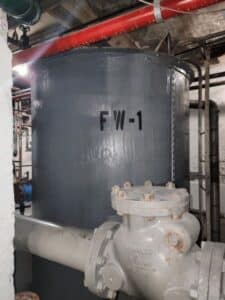 Why Proper Tank Design, Fire Water Tank Lining, and Fiberglass Tank Lining Matter
Fire protection is a critical requirement for commercial, residential, and industrial buildings in San Francisco. With dense urban neighborhoods, older structures, and strict local fire codes, many buildings rely on dedicated fire water storage tanks to provide consistent, immediate access to water during an emergency. These tanks must be sized correctly to meet both building needs and compliance standards—and their long-term performance depends on durable fire water tank lining, routine inspections, and professional water tank liner repair when needed.
What Determines the Size of a Fire Water Tank?
Multiple factors influence how large a fire water tank must be for a specific structure. Engineers consider:
1. Building Occupancy Type
Different building types—such as high-rises, warehouses, hotels, and data centers—have different fire risks and suppression requirements.
- High-rise buildings typically require larger tanks to support sprinkler systems across many floors.
- Industrial or manufacturing facilities need greater water volume due to higher fuel loads and open floor plans.
- Residential complexes may require moderate tank sizes depending on density and fire suppression system design.
2. Required Fire Flow Rate
The San Francisco Fire Code specifies the amount of water (in gallons per minute) that must be available for a set duration during a fire event. A tank must be large enough to support this sustained flow, often over 30 to 90 minutes.
3. Availability of Municipal Water
Areas with limited or inconsistent water pressure may require significantly larger tanks. Even in areas with strong municipal supply, many buildings add tanks as a redundancy measure to ensure uninterrupted fire protection.
4. Sprinkler and Standpipe System Requirements
Buildings with complex sprinkler networks, dual standpipes, or high hazard areas require additional water reserves. The more extensive the suppression system, the more water the tank must store.
5. Local Regulations & Insurance Requirements
San Francisco’s building and fire codes, along with NFPA standards, dictate minimum storage capacity. Insurance carriers may also mandate larger tanks for high-risk properties.
Why Fire Water Tank Lining Is Essential
No matter the size of the tank, proper fire water tank lining protects the structural integrity of the tank and ensures the water remains clean, accessible, and safe for fire suppression systems. Over time, corrosion, chemical reactions, and physical wear can compromise steel or concrete tanks—making linings essential for long-term reliability.
When Water Tank Liner Repair Is Needed
Visible damage, leaks, sediment buildup, or failed inspections can indicate that a commercial, residential, or industrial tank needs water tank liner repair. Timely repairs prevent structural degradation, minimize downtime, and keep a building compliant with fire safety regulations.
Benefits of Fiberglass Tank Lining
For many San Francisco buildings, fiberglass tank lining is an ideal solution because it is:
- Highly corrosion-resistant
- Durable and long-lasting
- Suitable for steel, concrete, and existing tank repairs
- NSF-approved for potable water
- Cost-effective for both new installations and refurbishments
Trust Picon FRP, Inc. for Fiberglass Fire Water Tank Lining & Repair
Picon FRP, Inc. is a leading expert in fire water tank lining, water tank liner repair, and fiberglass tank lining for buildings throughout the San Francisco Bay Area. Their specialized experience ensures every tank—no matter the size or application—remains reliable, compliant, and ready to protect your property when it matters most.
You must be logged in to post a comment.