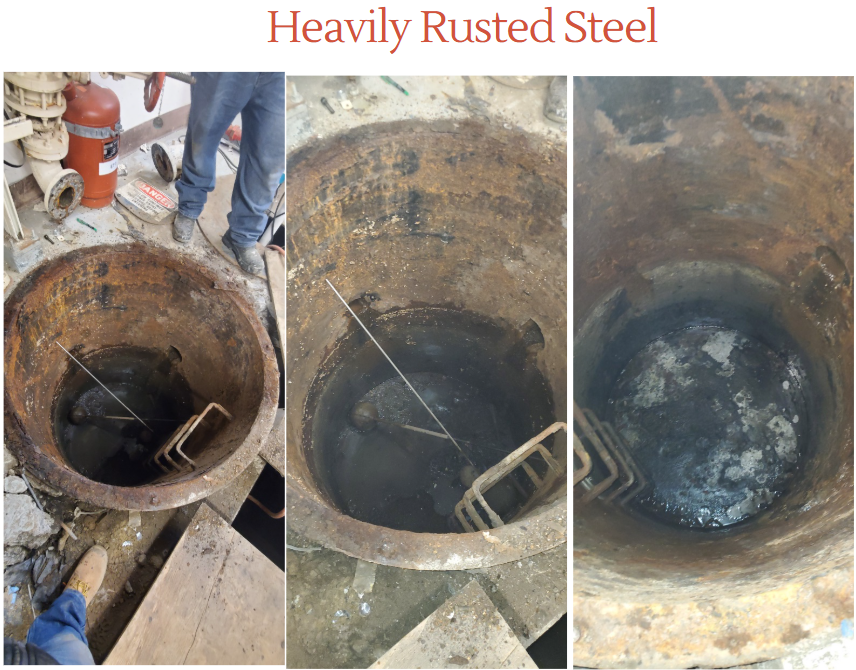
Problem:  Heavily rusted steel tank

Solution: New FRP lining

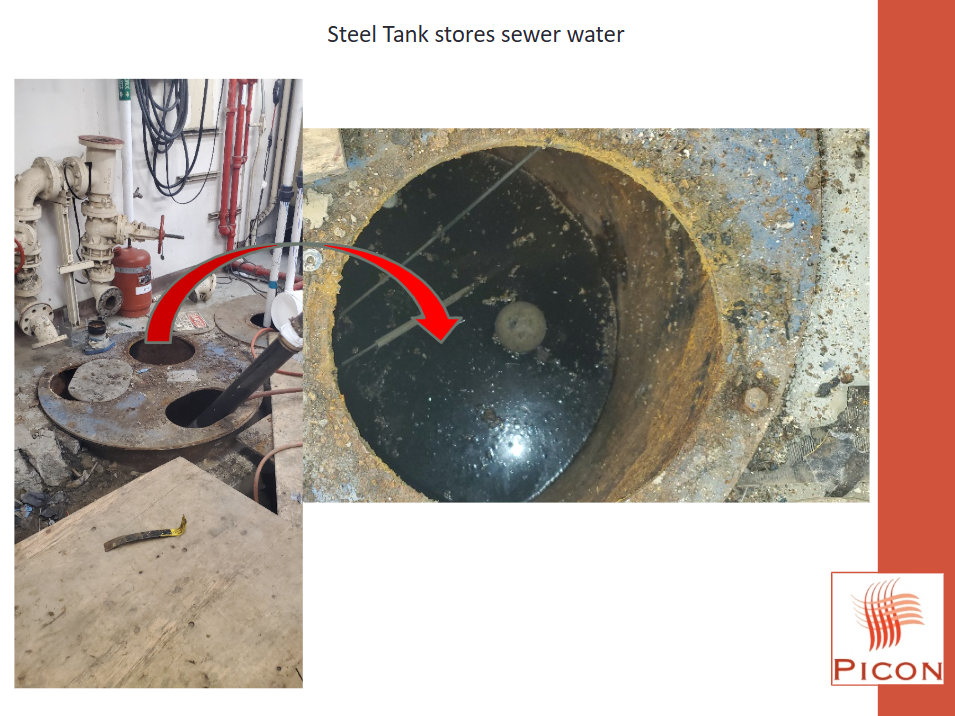
Steel Tank stores sewer water

Industrial pumping setup with pipes and valves on the left; a round access cover and hoses visible. The right shows an open manhole with dark sewer water inside, with a red arrow illustrating water transfer toward a larger circular tank. Logo: PICON bottom-right.

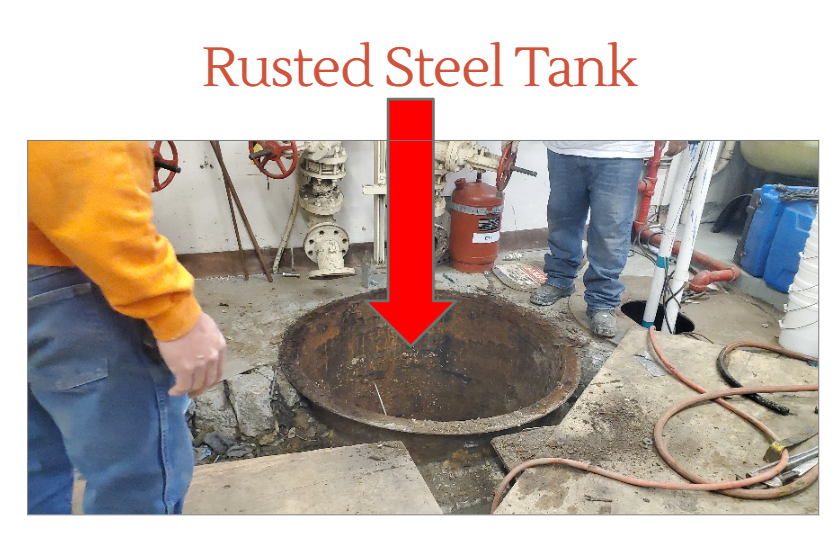
Open manhole in a rusted steel tank pit with two workers nearby in a workshop setting.

Three-panel photo of a severely rusted manhole being cleaned, with a ladder descending into dark water and workers nearby; title reads 'Heavily Rusted Steel'.

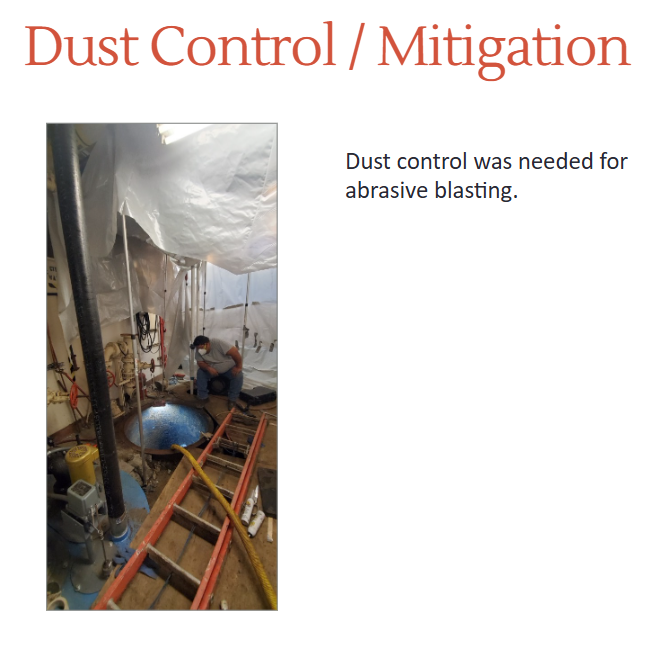
Worker crouching beside a blue containment pool inside a dusty, plastic-sheeted workspace during abrasive blasting dust-control setup.

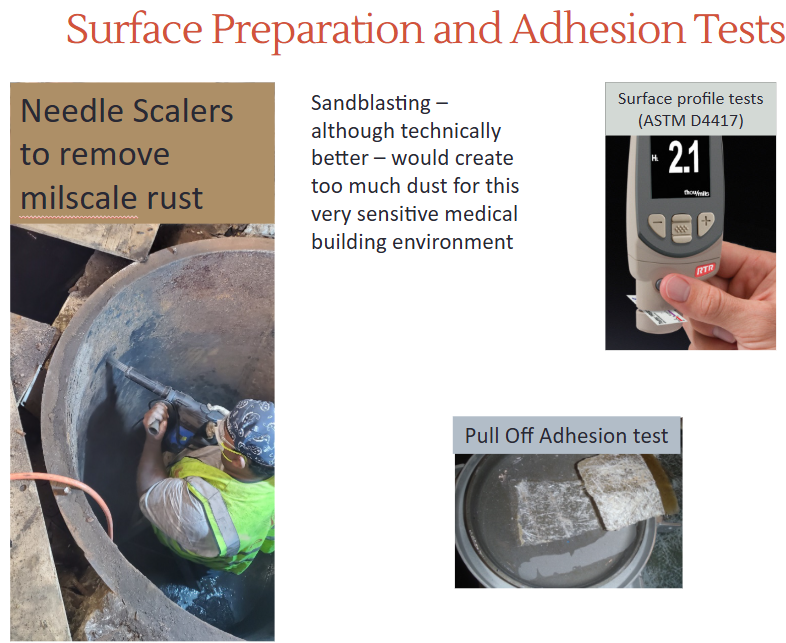
Infographic titled Surface Preparation and Adhesion Tests showing a worker in a high-visibility vest using a needle scaler to remove rust from a large pipe; center text explains sandblasting tradeoffs; right side shows surface profile tester (ASTM D4417) and a pull-off adhesion test image.


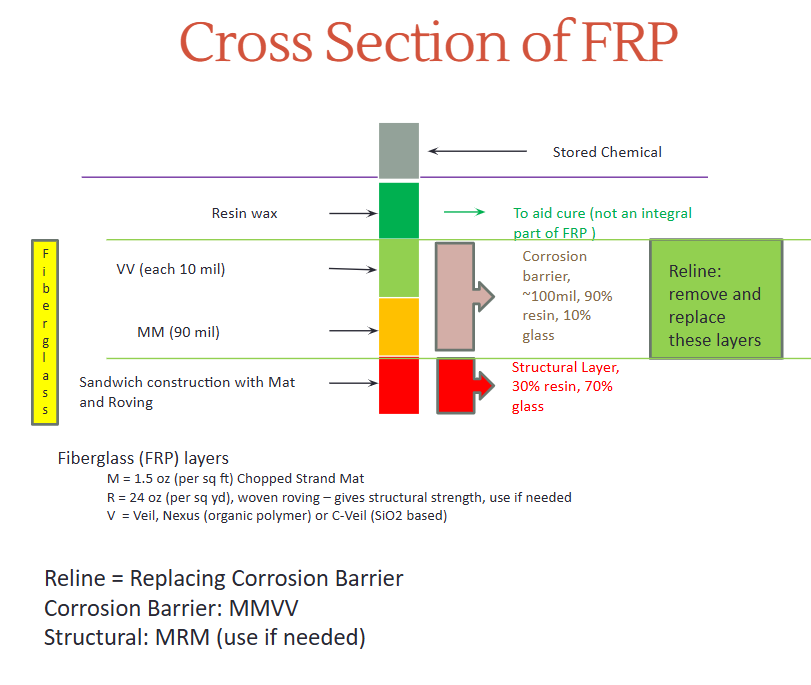
Cross-section diagram of FRP showing layered fiberglass components (resin wax, VV, MM) with a sandwich core, corrosion barrier, and a note about curing aid. Left side labels indicate Fiberglass.

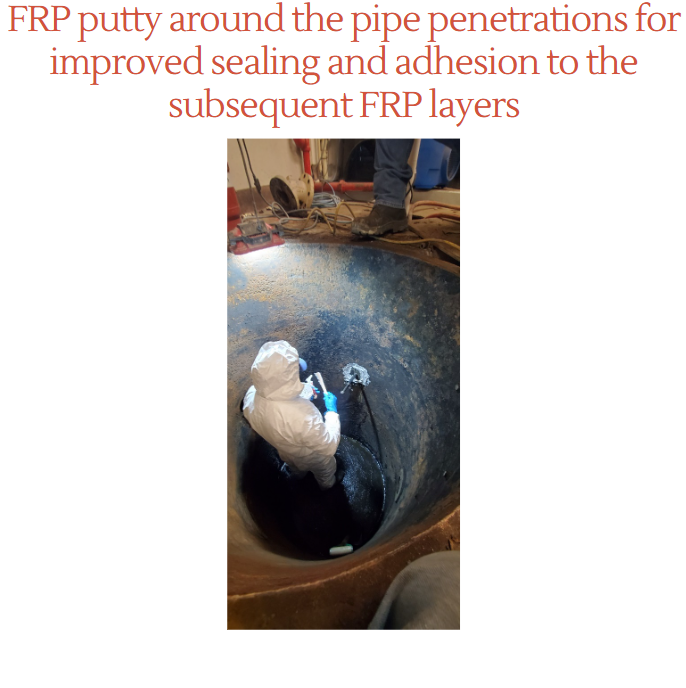
Worker in PPE applies putty around pipe penetrations inside a large cylindrical tank to seal for FRP layers prep

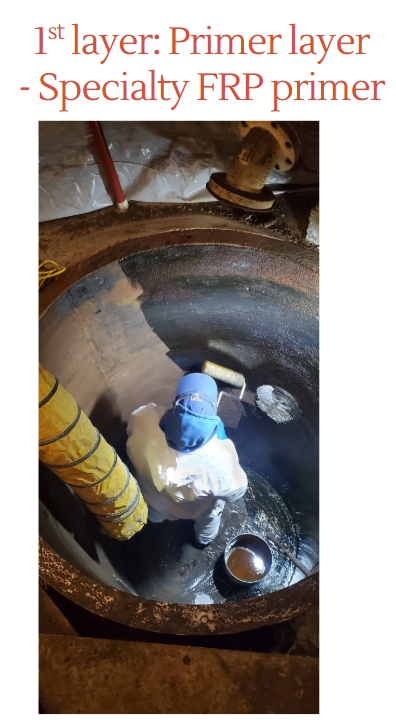
Worker in protective gear applying primer to the inside of a circular manhole using a roller, with hoses nearby.

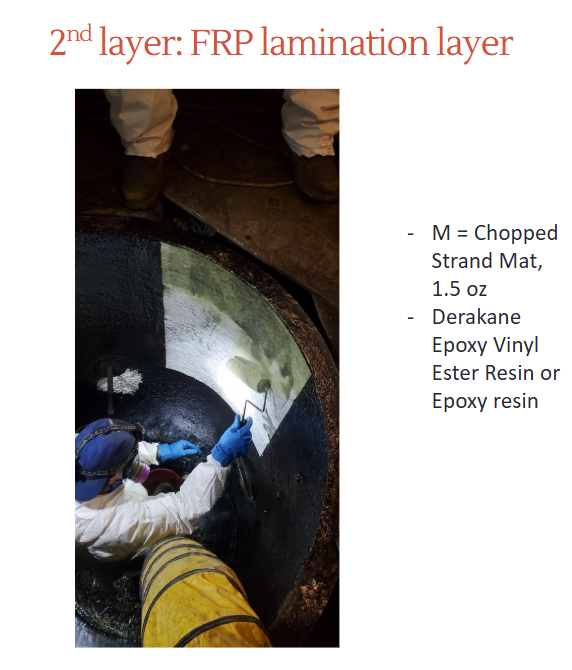
Worker in protective gear applies epoxy resin to the inside of a large pipe during FRP lamination; note section lists materials (M chopped strand mat; 1.5 oz) and Derakane epoxy resin by side.

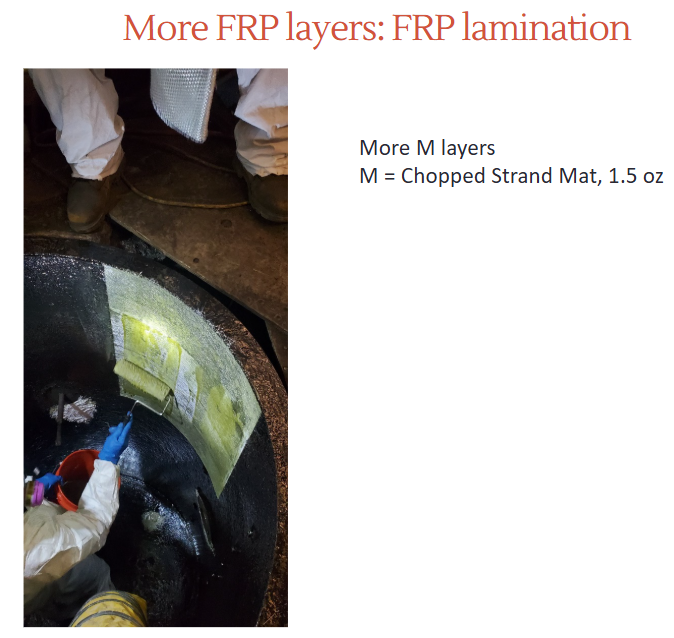
Worker in protective gear applying resin to a FRP laminate inside a cylindrical mold; yellow FRP labels visible on the inner surface, captioned with 'More M layers M = Chopped Strand Mat, 1.5 oz'.

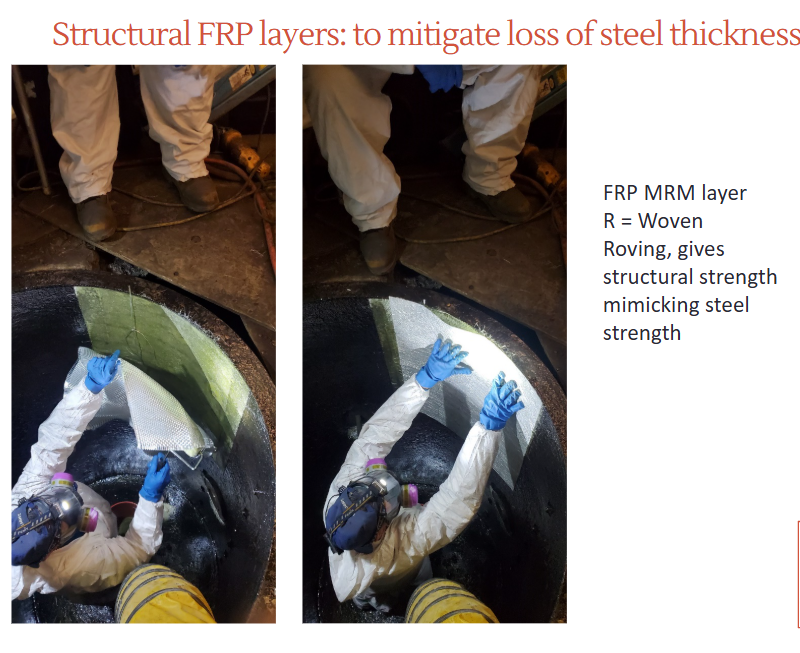
Two workers in protective suits install a woven FRP fabric inside a large tank, applying layers for structural reinforcement.

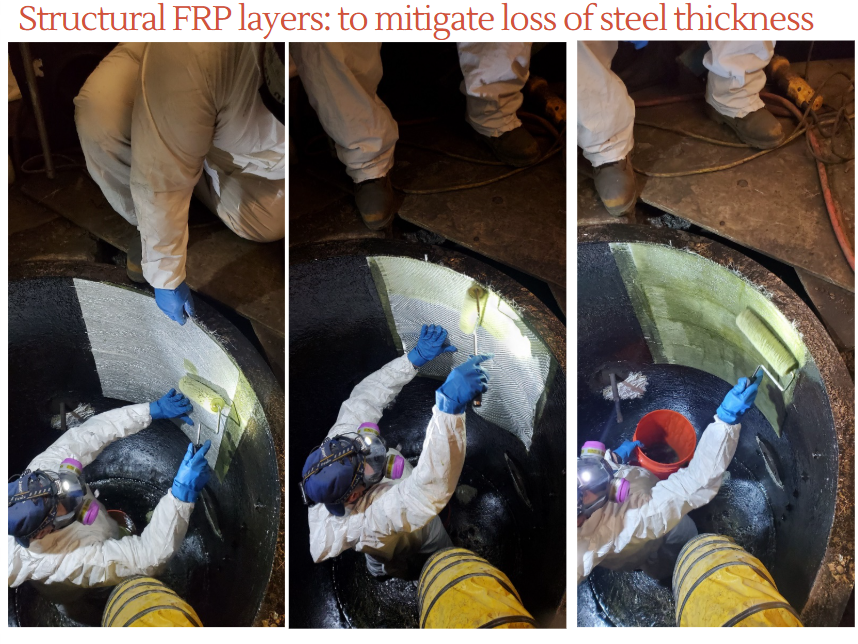
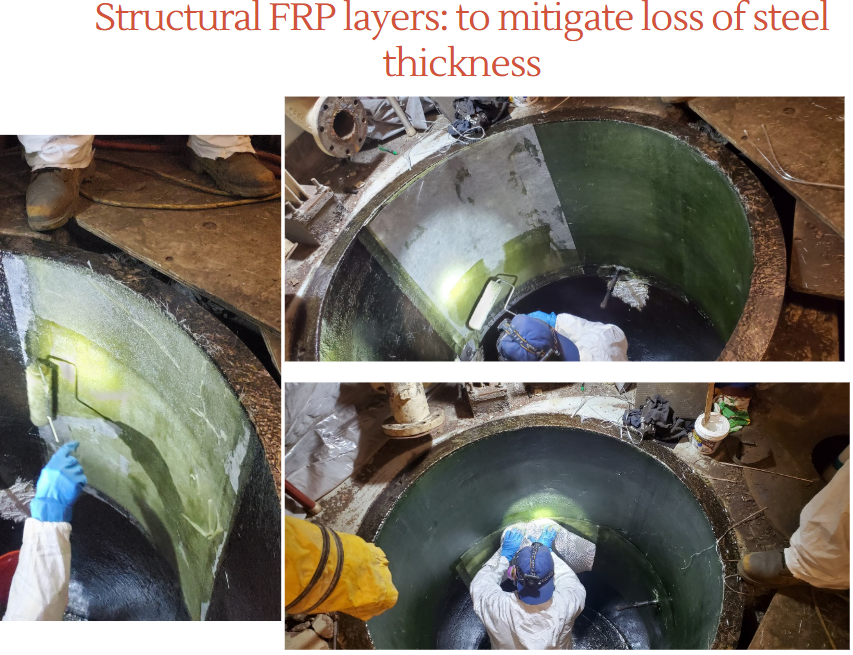
Workers in protective suits apply structural FRP layers to a circular tank wall to prevent steel thinning, shown in a three-panel sequence.

collage showing workers applying structural FRP layers to the inner wall of a large circular steel tank to mitigate thickness loss.

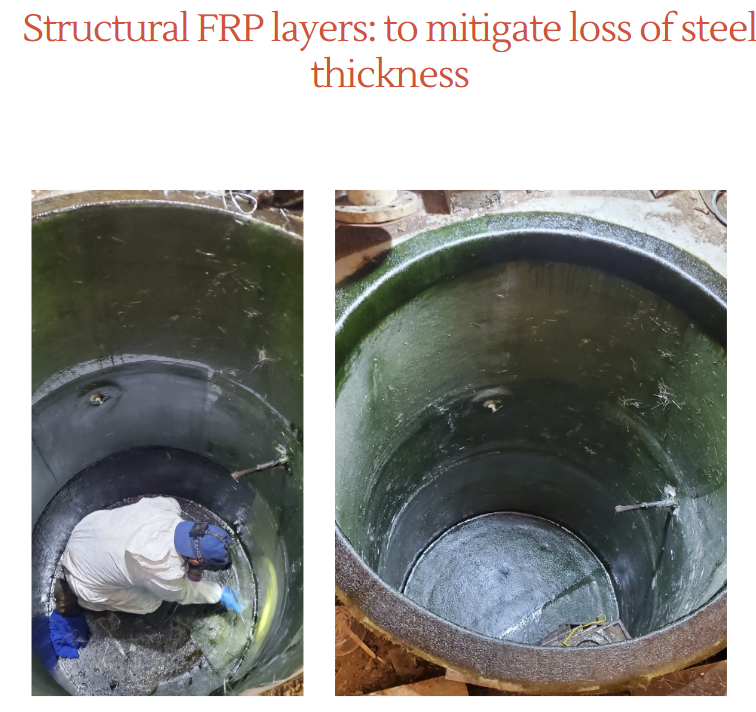
Two side-by-side photos of the interior of a large cylindrical tank; left shows a technician crouched at the bottom, cleaning or inspecting, right shows an empty tank interior.

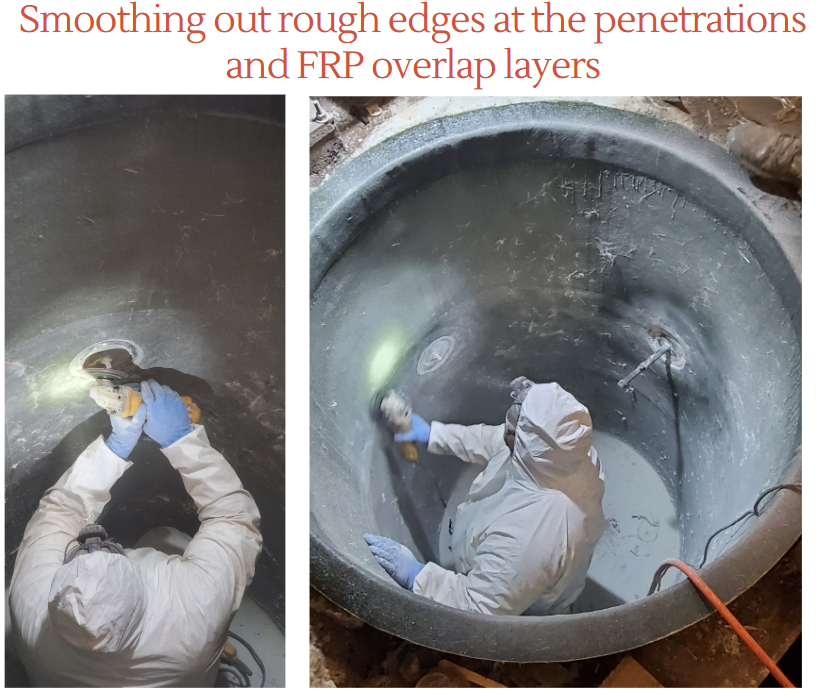
Two photos showing a worker in a white protective suit smoothing rough edges around a circular tank penetration inside a large cylindrical vessel.

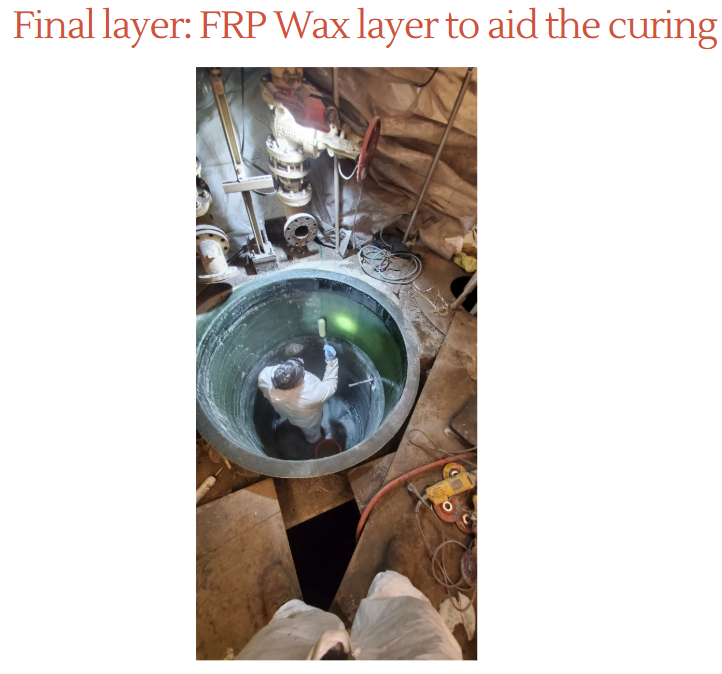
Worker inside a circular manhole tending to a curing FRP wax layer, with pipes and tools around the opening

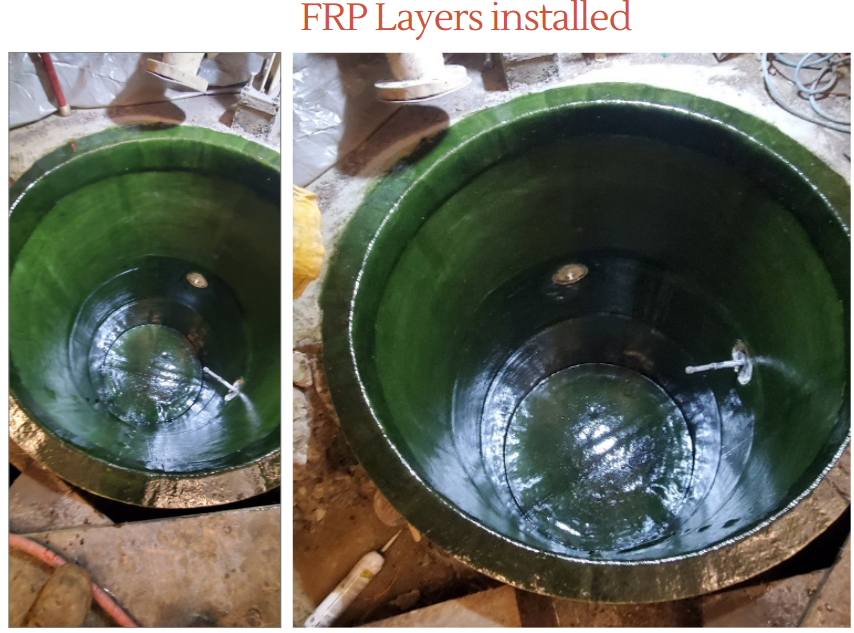
Two green circular FRP tanks viewed from above, showing glossy inner surfaces during installation (side-by-side photos).

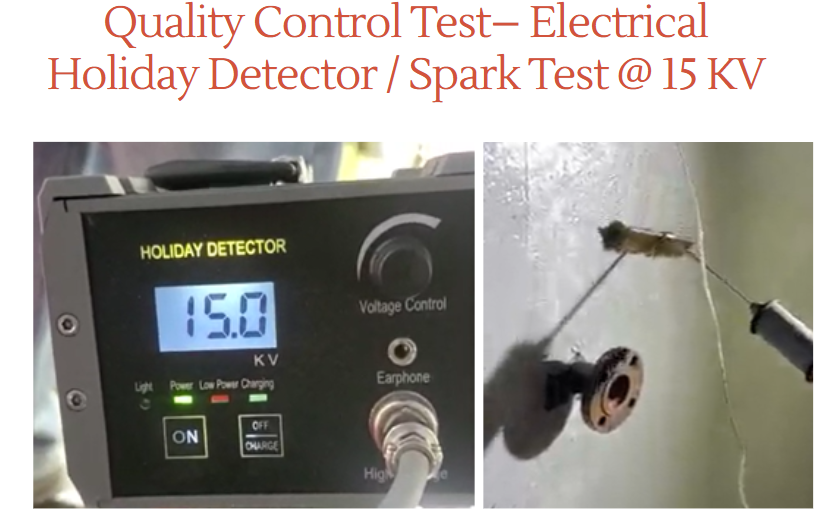
Composite image: left a holiday detector reading 15 kV, right a spark test probe applying a discharge to metal surface on a panel.

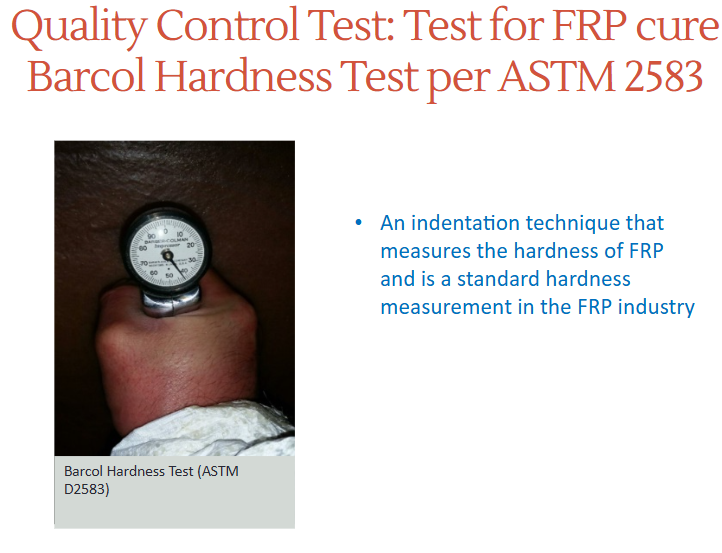
Forearm with Barcol hardness tester applied; caption reads 'Barcol Hardness Test (ASTM D2583)'.