

 Serving the Bay Area & Northern California for over 35 Years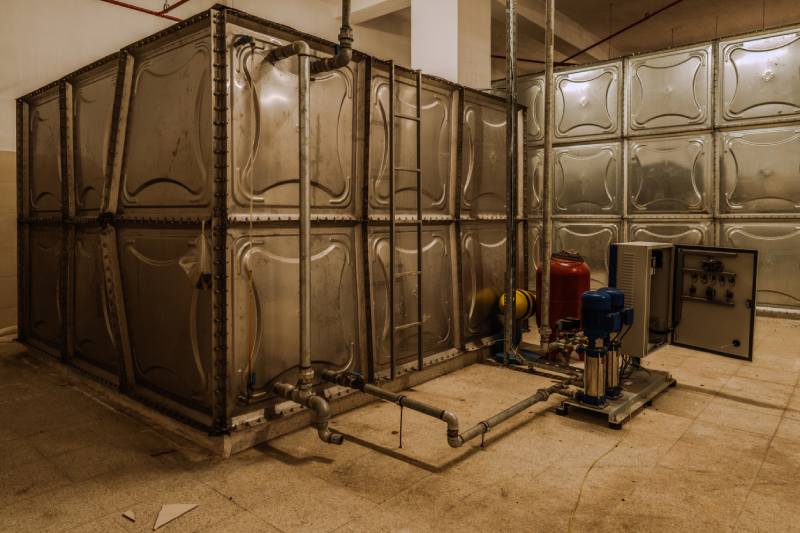
High-rise buildings throughout San Francisco rely on properly designed and maintained fire protection systems to meet strict safety codes. One critical component of these systems is the fire water storage tank. These tanks ensure a reliable water supply for sprinkler and standpipe systems during emergencies. However, the type of construction used—and how materials age over time—can significantly impact performance and the need for fire water tank repairs.
At Picon FRP, Inc., we specialize in evaluating, maintaining, and performing expert tank liner repairs and fiberglass tank lining services to extend the life of fire protection water storage systems in commercial and high-rise buildings.
Common Types of Fire Water Tank Construction – Fire Water Tank Repairs
Steel Fire Water Tanks
Steel tanks are widely used in high-rise buildings due to their structural strength and durability. These tanks may be located on rooftops, in mechanical rooms, or in underground vaults. While steel offers excellent load-bearing capacity, it is highly susceptible to corrosion—especially in environments exposed to moisture, salt air, and fluctuating temperatures.
Over time, interior coatings can deteriorate, allowing corrosion to form on the steel substrate. If left untreated, this corrosion can compromise tank integrity and contaminate stored water. Early detection and professional fire water tank repairs are essential to prevent costly structural damage.
Concrete Fire Water Tanks
Concrete tanks are often used for underground or basement installations. Reinforced concrete provides strength and fire resistance, making it suitable for large-capacity storage. However, concrete is porous and can crack due to settlement, seismic activity, or hydrostatic pressure.
As concrete ages, it may develop leaks or allow water intrusion from surrounding soil. Internal liners or coatings are typically applied to prevent seepage and protect reinforcement from corrosion. When these liners fail, timely tank liner repairs help prevent structural deterioration and maintain compliance with fire safety regulations.
Fiberglass (FRP) Tanks
Fiberglass reinforced plastic (FRP) tanks are increasingly used because they resist corrosion and are lightweight compared to steel or concrete. Fiberglass tank lining systems are also commonly installed inside steel or concrete tanks to create a seamless, corrosion-resistant barrier.
FRP systems perform exceptionally well in moist environments. However, aging, improper installation, UV exposure (for rooftop tanks), or mechanical damage can lead to cracking, blistering, or delamination. When this occurs, professional inspection and targeted tank liner repairs restore system integrity without requiring full tank replacement.
How Materials Age Over Time
All fire water tanks experience wear due to constant water exposure, pressure fluctuations, and environmental conditions. In coastal environments like San Francisco, salt-laden air accelerates corrosion in steel components. Seismic movement can stress concrete and steel joints, leading to cracks or weakened seams.
Interior linings—whether epoxy coatings or fiberglass tank lining systems—gradually degrade due to chemical exposure and age. Signs of failure include rust staining, leaks, blistering coatings, or visible cracking.
Routine inspections are essential. Many fire codes require periodic tank inspections to ensure readiness in an emergency. Identifying minor coating failures early allows for cost-effective fire water tank repairs before major structural issues develop.
When Fire Water Tank Repairs Are Required
Repairs are typically necessary when inspections reveal corrosion, liner separation, cracking, leaks, or compromised seams. Prompt tank liner repairs can restore watertight performance and extend the lifespan of the tank for many years.
Picon FRP, Inc. specializes in advanced fiberglass tank lining solutions designed to withstand the demanding conditions of high-rise fire protection systems. Our experienced team understands the unique challenges faced by buildings in San Francisco and delivers durable, code-compliant repair solutions that protect both property and occupant safety.
You must be logged in to post a comment.