

 Serving the Bay Area & Northern California for over 35 Years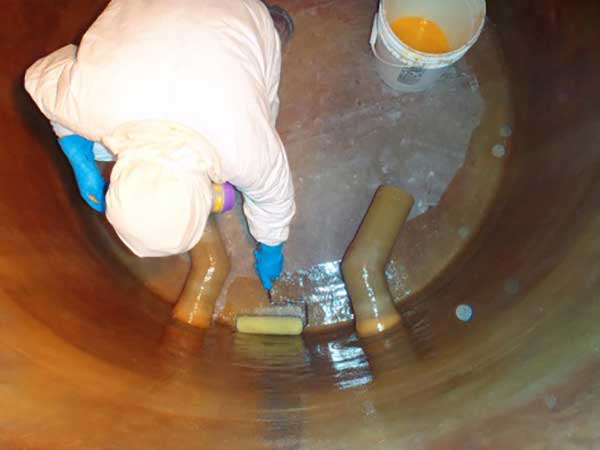
Fiberglass Tank Lining Fabrication and Repair
Fiberglass tanks are widely used across commercial and industrial applications due to their strength, corrosion resistance, and long service life. From storing potable water to supporting critical fire suppression systems, these tanks are built to perform under demanding conditions. However, understanding how fiberglass tanks are manufactured is essential to understanding why proper tank liner repairs, fire water tank repairs, and fiberglass tank lining techniques are so important as these systems age.
Fiberglass tanks are typically constructed using a process known as Fiberglass Reinforced Plastic (FRP) fabrication. This involves layering glass fibers with resin to create a composite material that is both lightweight and extremely durable. The most common manufacturing methods include filament winding and hand lay-up. In filament winding, continuous strands of fiberglass are coated in resin and wound around a rotating mold, creating a highly uniform and structurally sound tank. Hand lay-up construction, on the other hand, involves manually placing layers of fiberglass mat and resin to build thickness and strength.
These manufacturing methods result in tanks that are resistant to rust and chemical corrosion, unlike traditional steel tanks. However, over time, even fiberglass tanks can experience wear. Factors such as UV exposure, thermal expansion, chemical interaction, and constant water pressure can gradually degrade the internal surfaces and structural integrity. This is where professional fiberglass tank lining and repair strategies become critical.
As fiberglass tanks age, the inner liner is often the first component to show signs of deterioration. Cracking, blistering, or delamination of the liner can compromise the tank’s ability to safely contain liquids. Because the liner is bonded directly to the structural layers during manufacturing, repairs must be approached with a deep understanding of how the tank was originally built. Simply patching a damaged area without addressing the underlying bonding structure can lead to recurring issues.
Effective tank liner repairs involve carefully removing compromised material, preparing the surface, and applying new layers of resin and fiberglass that integrate seamlessly with the existing structure. This process restores both the protective barrier and the tank’s structural integrity. For fire suppression systems, timely fire water tank repairs are especially important, as these tanks must remain fully operational in emergency situations where failure is not an option.
Another important consideration is that older fiberglass tanks may not have been built using the same advanced resins and fabrication techniques available today. Modern repair materials often provide improved resistance to chemicals, temperature changes, and long-term wear. This allows experienced technicians to not only fix existing problems but also enhance the overall durability of the tank moving forward.
Routine inspections play a key role in identifying issues early. Small cracks or surface imperfections can quickly escalate if left unaddressed, leading to more extensive and costly repairs. By implementing a proactive maintenance plan, facility managers can extend the lifespan of their tanks and avoid unexpected downtime.
Fiberglass Tank Lining Specialists – Picon FRP, Inc.
Picon FRP, Inc. specializes in fiberglass tank lining, tank liner repairs, and fire water tank repairs for a wide range of industries. With extensive experience in FRP systems, their team understands the nuances of fiberglass tank construction and applies proven repair techniques that restore performance and reliability. Whether addressing aging infrastructure or upgrading existing systems, Picon FRP, Inc. delivers solutions designed to keep your tanks operating safely and efficiently for years to come.
You must be logged in to post a comment.