

 Serving the Bay Area & Northern California for over 35 Years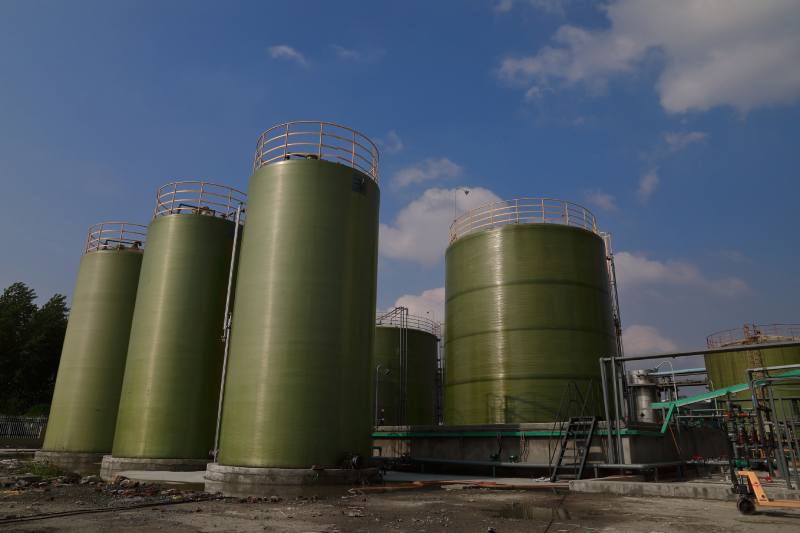
FRP Tank Linings Are Great But They Aren’t Made For Every Scenario
Fiber reinforced plastic (FRP) tanks are widely used for storing and processing many industrial chemicals because they offer corrosion resistance, durability, and relatively low maintenance requirements. However, FRP is not automatically compatible with every chemical. The resin, reinforcement materials, concentration, temperature, and exposure conditions all affect how a tank will perform. Choosing the right material and professional tank linings is essential for protecting storage equipment and preventing premature failure.
Chemicals Well Suited for FRP Tanks
FRP tanks and tank liners can be excellent choices for many corrosive chemicals. Depending on the resin system and tank design, FRP may be used for acids, alkalies, salts, and other industrial chemicals.
Common applications can include storage of diluted sulfuric acid, hydrochloric acid, sodium hydroxide, sodium hypochlorite, and certain wastewater chemicals. FRP is also frequently considered for applications involving water treatment, chemical processing, industrial wastewater, and other corrosive environments.
The key is selecting a resin system specifically engineered for the chemical being stored. Vinyl ester, epoxy, and polyester resins have different chemical resistance characteristics. A qualified FRP professional can evaluate the chemical composition, concentration, operating temperature, and expected exposure before recommending an appropriate material.
Chemicals That May Not Be Compatible
Not all chemicals are suitable for conventional FRP construction. Certain highly aggressive chemicals, solvents, and concentrated acids can attack particular resin systems or cause the laminate to deteriorate over time.
Strong oxidizing agents, concentrated acids, and some organic solvents require special consideration. Chemicals such as acetone, certain chlorinated solvents, and other aggressive solvents may not be compatible with standard polyester or vinyl ester FRP. Extremely high concentrations or elevated operating temperatures can also change the compatibility of a chemical that might otherwise be suitable at lower concentrations.
Because chemical compatibility depends on the specific formulation, it is important not to select a tank or lining based solely on the chemical’s name. Concentration, temperature, exposure time, and other operating conditions should all be evaluated.
The Importance of Proper Tank Linings
When an existing tank is structurally sound but its interior surface has deteriorated, tank rehabilitation may provide an alternative to complete tank replacement. A professionally installed FRP lining can create a corrosion-resistant barrier between the stored material and the underlying tank structure.
However, the lining material must be selected for the specific application. A properly engineered lining can extend service life, but using an incompatible resin or applying a lining to an unsuitable surface can lead to blistering, delamination, cracking, or chemical attack.
Professional inspection and preparation are therefore critical parts of any tank rehabilitation project. The condition of the existing tank, substrate, previous coatings, and operating environment should be evaluated before work begins.
Consult an FRP Professional for All Your Tank Linings Questions
FRP can provide excellent chemical resistance when the tank and materials are correctly designed for the application. At Picon FRP, Inc., experienced professionals can help evaluate storage requirements and determine whether FRP tanks, tank liners, or specialized tank linings are appropriate for a particular chemical service.
Before storing a new chemical or beginning a tank rehabilitation project, consult a qualified FRP contractor to verify chemical compatibility. Selecting the right materials from the beginning can help protect equipment, extend service life, and provide reliable performance in demanding industrial environments.
You must be logged in to post a comment.