

 Serving the Bay Area & Northern California for over 35 Years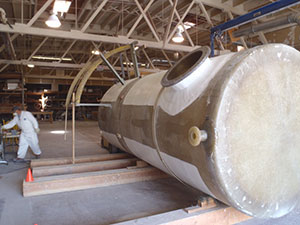
Fire protection is one of the most critical safety systems in any high-rise building, and fire water tanks play a central role in ensuring that sprinkler systems and standpipes function effectively during an emergency. These tanks must be carefully engineered, constructed, and maintained to meet strict safety standards. Companies like Picon FRP, Inc. specialize in FRP linings, FRP liners, and FRP repairs, which are essential components in keeping these systems reliable and compliant.
The Purpose of Fire Water Tanks in High-Rise Buildings
High-rise buildings require dedicated fire water storage because municipal water pressure alone is often insufficient to reach upper floors during a fire. Fire water tanks store large volumes of water that can be rapidly deployed through sprinkler and standpipe systems when needed. These tanks are typically located on rooftops, intermediate mechanical floors, or underground levels, depending on the building design.
Because these tanks must remain operational at all times, they are designed with durability, corrosion resistance, and long-term performance in mind—this is where FRP liners become especially valuable.
Why FRP Linings Are Essential
Fiberglass Reinforced Plastic (FRP) is widely used in fire water tanks due to its strength, corrosion resistance, and longevity. FRP linings are applied to the interior surfaces of tanks to create a seamless, watertight barrier that protects the structure from rust, chemical exposure, and microbial growth.
Compared to traditional materials like steel or concrete alone, FRP liners significantly extend the life of a tank while reducing maintenance needs. They are especially important in environments where water quality, temperature fluctuations, or chemical treatments could degrade unprotected surfaces over time.
Design Standards and Engineering Considerations
Fire water tanks for high-rise buildings must be designed in accordance with strict codes and standards, such as those established by the National Fire Protection Association (NFPA), particularly NFPA 22 (Standard for Water Tanks for Private Fire Protection). These standards dictate tank size, material specifications, seismic considerations, and structural integrity requirements.
Engineers must calculate the required water capacity based on the building’s height, occupancy type, and fire suppression system demands. The tank must also be designed to withstand hydrostatic pressure, wind loads, and, in some regions, seismic activity.
Incorporating FRP linings into the design helps ensure that the tank meets these standards over time by preventing internal degradation that could compromise structural integrity or water quality.
Certification and Inspection Requirements
Before a fire water tank can be approved for use, it must undergo rigorous inspection and certification processes. These include leak testing, structural inspections, and verification that all materials meet regulatory requirements. Ongoing inspections are also required to ensure continued compliance.
Over time, wear and tear or environmental factors may lead to damage inside the tank. This is where FRP repairs become critical. Professional repair services can restore the integrity of the lining without requiring full tank replacement, saving building owners significant time and money.
The Importance of Maintenance and Repairs
Routine maintenance is essential to keeping fire water tanks in peak condition. Even the most well-designed systems can experience issues such as cracks, blistering, or delamination in their linings. Addressing these problems early with expert FRP repairs helps prevent costly failures and ensures the system will function properly in an emergency.
Why Choose Picon FRP, Inc. FRP Repairs
Picon FRP, Inc. has extensive experience in installing, maintaining, and repairing FRP liners for fire water tanks in high-rise buildings. Their expertise ensures that tanks remain compliant with safety standards while maximizing durability and performance.
FRP Repairs and Fabrication
Fire water tanks are a vital component of high-rise fire protection systems, and their design and certification require careful planning and expert execution. By incorporating high-quality FRP linings, utilizing durable FRP liners, and investing in timely FRP repairs, building owners can ensure their systems remain reliable, compliant, and ready to perform when it matters most.
You must be logged in to post a comment.